Questions to Ask Your Ahmedabad Wedding Photographer Before Booking
October 12, 2026
Bride and Groom Both-Side Wedding Coverage in Ahmedabad
October 12, 2026
How to Read a Full Wedding Photography Gallery Before Booking in Ahmedabad
A wedding portfolio can win your attention in a few seconds. A full wedding gallery asks for a little more patience, but it tells you much more about the coverage you may receive. For couples booking a wedding photographer in Ahmedabad, that difference matters when a celebration includes family rituals, several venues, crowded stages and changing light.
The aim is not to judge every photograph like a competition entry. You are checking whether the team records an entire wedding in a way you value. Set aside enough time to view the gallery on a larger screen, ask permission where needed and choose an example broadly similar to your plans. This guide explains what to notice and how to turn those observations into useful questions.
Choose an example that resembles your celebration
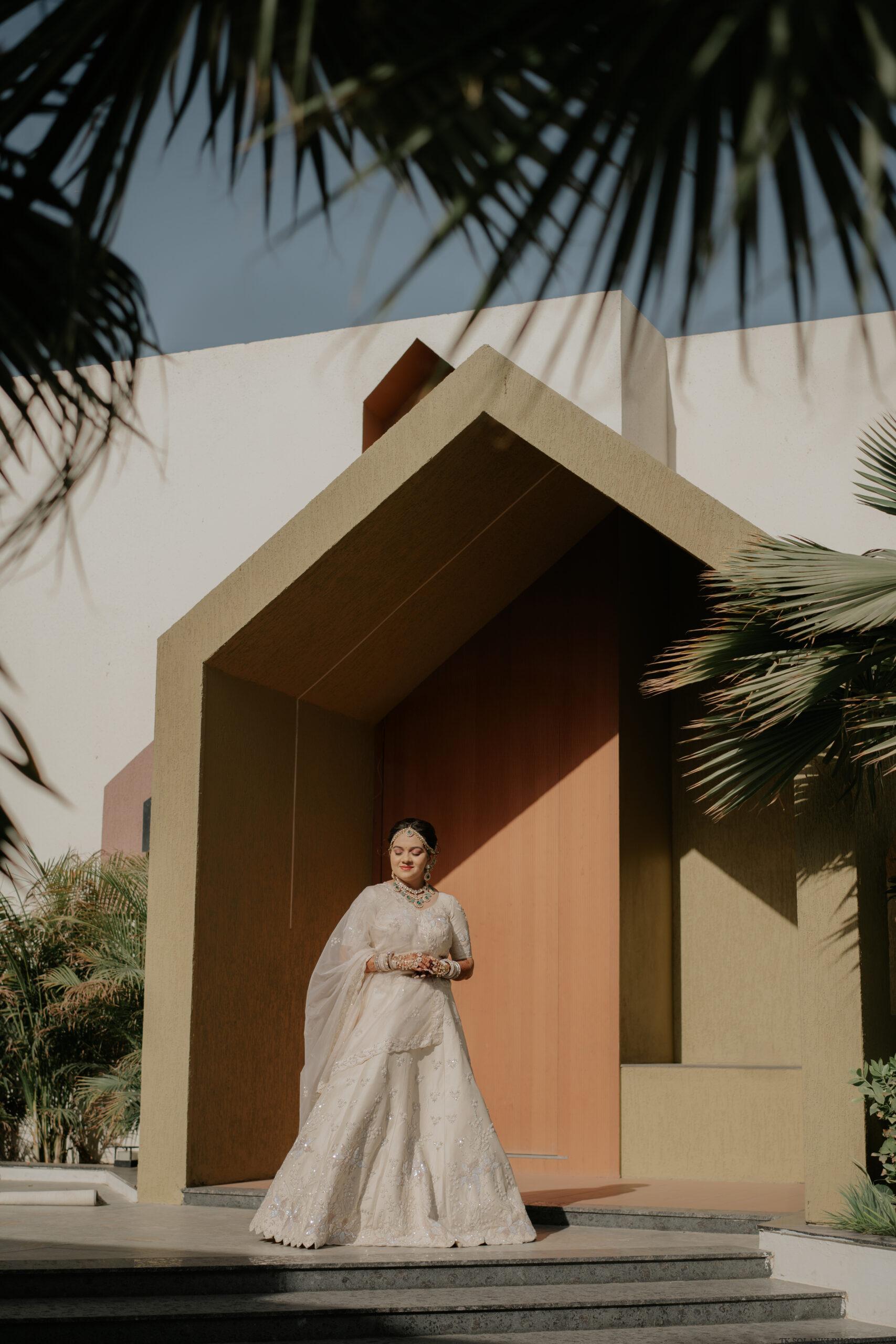
Start with the conditions, not just the couple’s outfits. A sunlit garden wedding will not answer every question about an evening ceremony inside a banquet. Ask for a gallery with a comparable venue type, approximate scale and event sequence. It need not match your wedding exactly; it should contain the challenges your team is likely to face.
If both families have separate preparations, look for coverage that includes different locations. If your wedding is intimate, a gallery from a smaller celebration may reveal how a photographer handles personal interactions without relying on elaborate décor. For a reception with many guests, look at stage groups and the photographs away from the couple.
Respect the privacy of the people in the gallery. A photographer may show a password-protected selection or walk you through images during a meeting instead of sending a public link. That can still be helpful. Ask whether the example reflects the team and services available for your date, especially when a studio uses several photographers.
Follow the day before inspecting individual pictures
Move through the photographs in their presented order. Can you understand how the celebration unfolded? Look for preparations, arrivals, introductions to family members, ceremony moments and the transition into later events. You should not have to identify every ritual to feel that the people and sequence have received attention.
Notice where the story becomes thin. There may be a reasonable explanation: a private ritual, a break in commissioned coverage or a couple who requested fewer guest photographs. Ask rather than assuming poor work. What matters is whether the explanation makes sense and whether your own expectations would be different.
Pay attention to small transitions too. A parent helping with an outfit, cousins waiting near the entrance or a quiet conversation after the ceremony can connect formal events. A gallery made entirely of dramatic poses may appeal visually, but it may not represent the family record you want. Decide how much space you would like for these ordinary, meaningful moments.
Look for people beyond the bride and groom
Check whether both families appear in the coverage. Look at elders, siblings, friends and guests who are not on stage. Their presence helps you assess how the photographer observes a room. A strong couple portrait collection does not automatically mean the team will notice the relative travelling from far away or the grandparent seated quietly nearby.
Study expressions rather than counting faces. Are people photographed while interacting naturally, or does most guest coverage consist of someone looking startled at the camera? Formal pictures have their place, but candid family photographs should also feel considerate. You can ask how a family priority list informs this part of the coverage.
Watch for variety within important relationships. For example, a mother and daughter might appear together during preparation, a ritual and a family group. These pictures serve different purposes. If your own family has particular sensitivities, mobility needs or relatives who must be photographed separately, explain them after the gallery review so the team can suggest an approach.
Assess consistency when the light changes
Compare preparation photographs, ceremony pictures and evening images. Skin tones may look different under different lighting, but faces should remain readable within the chosen editing style. Examine bright clothes, dark suits and jewellery as well. You are checking whether detail is handled thoughtfully, not looking for identical colour in every room.
Indoor mixed lighting can be difficult: decorative lamps, stage fixtures and window light may all affect a scene. Look at several photographs from the same situation. An isolated unusual result matters less than a whole sequence that makes people look uncomfortable or unclear. Ask how the team plans additional light at your venue if necessary.
Night photographs deserve a separate look if your events finish after dark. Can you recognise expressions in action photographs? Do group pictures hold together when the crowd grows? You don’t need to understand flash settings. Describe what you notice and ask whether the look is intentional, whether it suits your venue and what preparation the team recommends.
Separate photographic style from coverage quality
Some couples love warm colours and dramatic shadows; others prefer a lighter, quieter treatment. Taste is personal. Coverage quality involves different questions: whether people are represented, key moments are visible and the work remains useful across the event. A style you admire still needs to suit the record you want.
| Gallery feature | What to look for | Question to ask |
|---|---|---|
| Couple portraits | Expressions and variety of direction | How much portrait time did this couple have? |
| Ceremony sequence | Actions, reactions and understandable order | How do you learn our ritual priorities? |
| Family groups | Visible faces and sensible arrangement | Who helps organise our relatives? |
| Evening coverage | Consistent faces in changing light | What lighting arrangements would our venue need? |
| Guest coverage | People away from the main stage | How will our guest priorities be shared? |
Use the table to record concrete observations from each gallery. Write “family photographs seem rushed near the end” rather than “not premium enough”. Specific notes make comparisons fairer and help a photographer explain the circumstances. They also keep you from being distracted by décor or outfits that are unrelated to photographic decisions.
Examine portraits and details in context
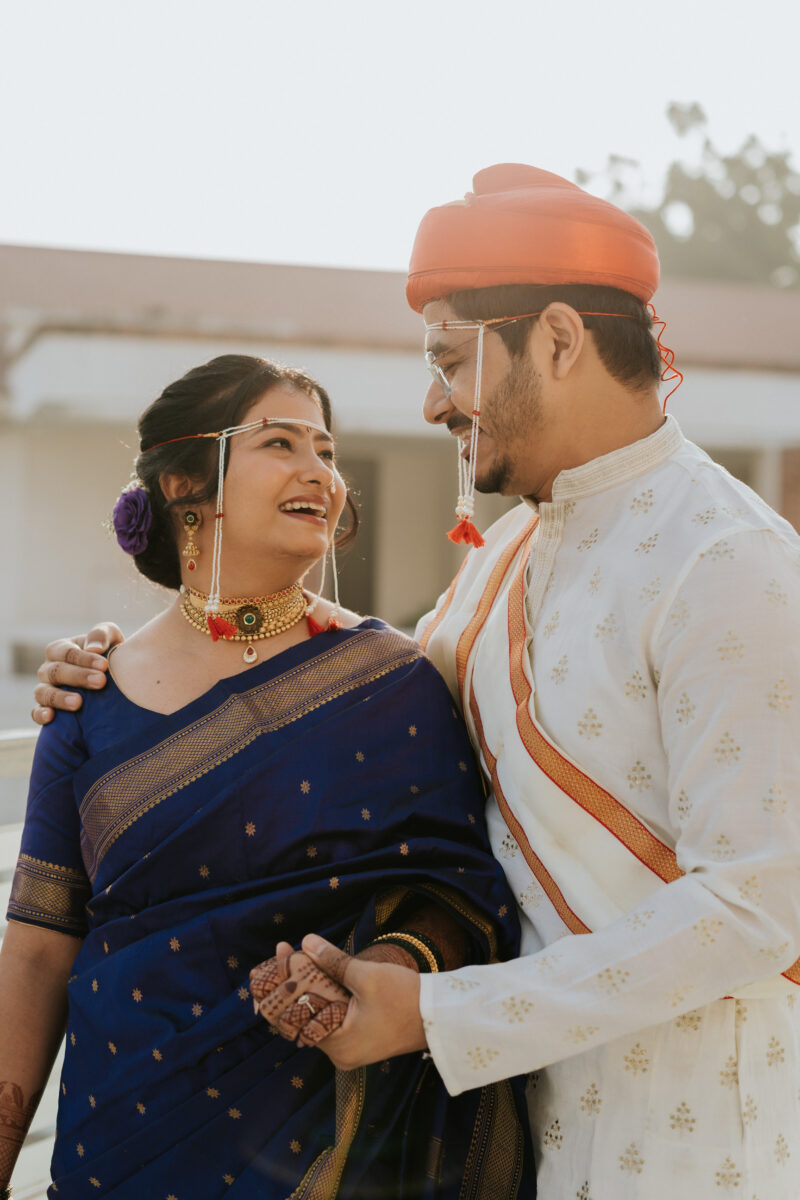
Look at whether portraits include different distances and relationships. Close expressions, full outfit photographs and wider environmental pictures give an album different kinds of material. They do not all need to appear equally often. Ask which would matter for your outfits and venue, and how the photographer would make time for them.
Details should support the story. Jewellery, invitations, décor and ritual objects can be useful, but a long decorative sequence may mean less to you than photographs with family. Notice the balance. If you have a sentimental item, such as inherited jewellery or a family photograph placed at the ceremony, mention it explicitly rather than expecting the team to recognise its significance.
Also watch how posing sits alongside the event. Are portraits polished while the rest of the gallery feels neglected, or is there a coherent mix? The TK Solanki wedding stories can help you identify visual preferences before requesting a fuller example. Save only references that you can describe: a relaxed expression, a family interaction or a particular framing.
Turn the review into a useful meeting
Select a few photographs you liked and a few moments you want explained. Ask about the planning behind them rather than requesting an exact copy. The answer may involve portrait time, access to a room, family coordination or a particular lighting setup. These are decisions you can translate into your own event plan.
Compare the example with the proposal. Was that gallery made with the same type of coverage and team size? A multi-day wedding supported by several people may contain more variety than a short single-function booking. Clarify what is relevant to your scope. Avoid treating every photograph in a studio’s archive as a promise for your wedding.
If you want a broader booking framework, read how to choose a wedding photographer in Ahmedabad. Then discuss your priorities alongside the wedding photography service. A gallery review should leave you with a clearer decision, a realistic portrait plan and a written coverage brief, rather than a longer collection of screenshots.
Revisit the gallery after the meeting
After hearing the photographer’s explanation, return to the sequences you were uncertain about. You may understand why a particular group appears later or why the ceremony has fewer posed pictures. Keep the distinction between explained circumstances and your own preference. A reasonable explanation does not require you to like the style; it simply gives you better information for choosing.
Frequently asked questions
How many complete galleries should we review?
Start with one relevant gallery per shortlisted team. Request another when the first does not show a condition you need to understand, such as a night ceremony or separate family locations. More viewing is useful only when it answers a new question.
Should every photograph be exceptional?
A wedding gallery includes documentary records as well as standout portraits. Judge whether the overall work is consistent, considerate and meaningful. A straightforward family photograph can be valuable even when it is not visually dramatic.
Can we send our favourite images to the photographer?
Yes, with a short explanation of what you like. A small selection with clear preferences is easier to discuss than dozens of unrelated references. The photographer can explain which ideas suit your venue and schedule.
Request a relevant wedding example
Share your Ahmedabad venue, wedding date and main functions through the TK Solanki contact page. Mention whether you would like to understand indoor, outdoor, evening or both-side coverage. Asking for a relevant gallery alongside a coverage discussion will help you evaluate the work against your own celebration instead of making a decision from the most striking photograph alone.