Ahmedabad Wedding Photography Brief: What to Share With Your Photographer
October 12, 2026
Outdoor Wedding Photography in Ahmedabad: A Venue Planning Checklist
October 12, 2026
Night Wedding Photography in Ahmedabad: Lighting Questions to Ask
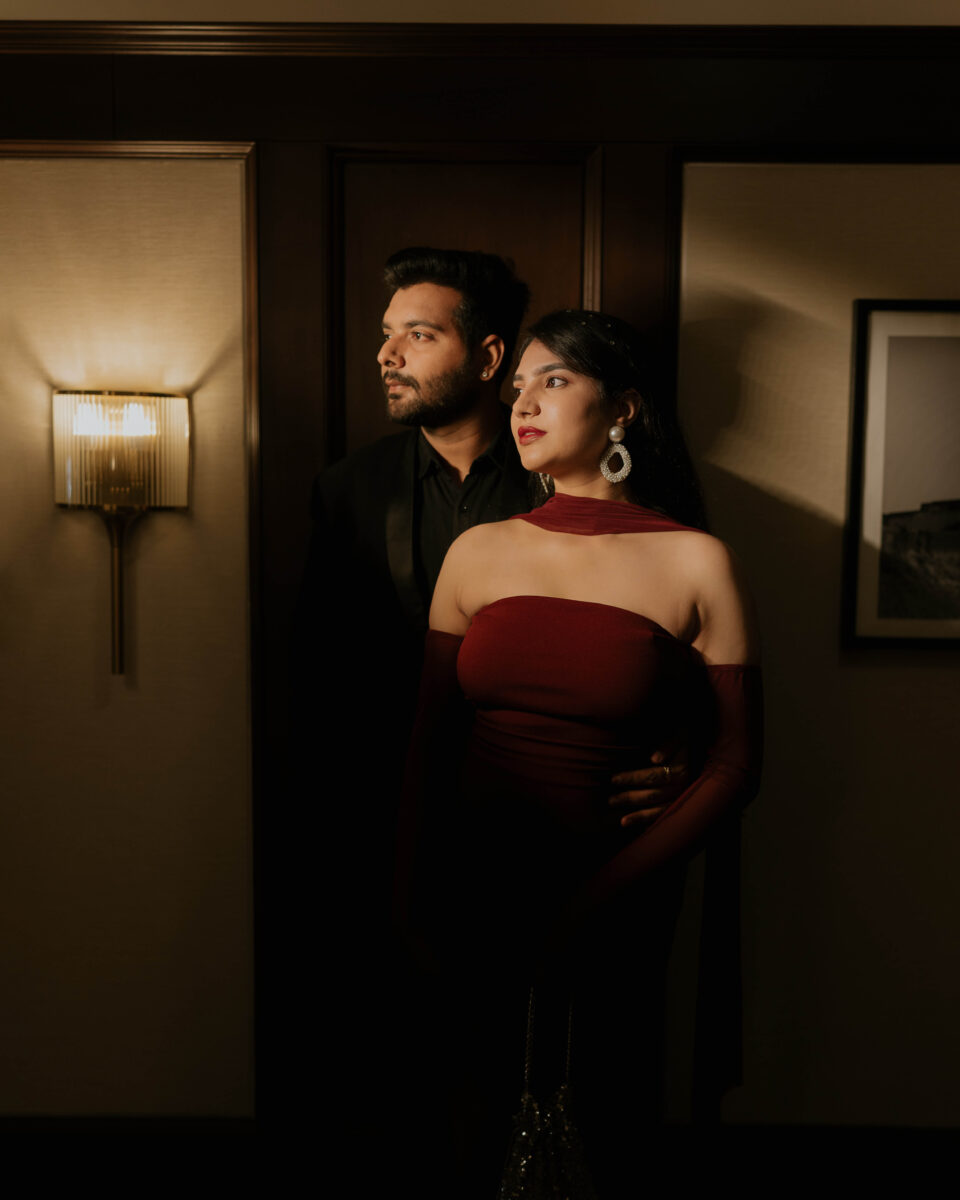
At a night wedding in Ahmedabad, the lighting you see in the decoration and the lighting needed for photographs are connected, but they serve different purposes. Fairy lights can create a lovely background while leaving faces quite dark. A bright stage can look impressive to guests yet produce strong shadows when the couple turns towards each other.
You do not need to become a lighting technician before booking your photographer. You do need a few clear answers about the mandap, family portraits, moving celebrations and equipment placement. These questions help you protect the mood of your evening while giving the team a workable environment for meaningful photographs.
Describe the evening by activity
Tell the photographer what will happen after dark, not simply that your wedding is a night function. A seated ceremony, a moving baraat, dinner on a lawn and a reception stage each need different decisions. Mention whether these activities happen in one place or across several parts of the property. Walking routes can be darker than the main celebration area.
Share the approximate sequence and indicate which moments have fixed timing. If family groups will be photographed after the ceremony, make sure the relevant space remains lit and accessible. Venues sometimes begin clearing areas while another part of the event continues. A named coordinator can help the photographer keep an essential portrait corner available until the required groups are finished.
Check entrances and short transitions
An evening entrance can last only a few moments, so share its route and planned cue with the photographer. Explain whether the couple will walk together, enter separately or pause to greet family. If decorative effects or a performance are planned, tell the team beforehand. They need enough information to choose a position without having to ask questions while everyone is already watching the entrance.
Ask the coordinator to give a clear advance signal rather than waiting until the couple has started moving. Keep the immediate route free of people who are not part of the entrance, while allowing family reactions to happen naturally. If the entrance runs late, a quick update helps the team remain ready instead of moving to another activity. Avoid repeating the entrance solely for photographs unless you actually want a separate arranged sequence. The original reactions, even in a busy environment, are often the reason the moment matters.
Include the final exit too if it is important to your family. Confirm whether it falls within the agreed coverage period and where the vehicle will be waiting. Otherwise the team may begin packing while relatives expect another significant moment to be photographed.
Ask how faces will be lit
A useful question is, “How will you photograph our faces under this setup?” It is more specific than asking whether the team has good cameras. Depending on the space and activity, a photographer may use existing light, flash or continuous lights. Ask for a plain explanation of the proposed approach and how it will change between the ceremony and portraits.
Lighting should allow the team to respond to real moments. If every photograph requires the couple to stand on one marked spot, the plan may be unsuitable for a moving celebration. On the other hand, a dedicated portrait area can work well for organised family groups. Discuss both situations separately so you understand what will be flexible and what will be controlled.
Coordinate with your decorator early
Send the lighting plan and stage design to the photography team when they become available. Coloured uplights near faces, very bright lights behind the couple and overhead fixtures aimed directly down can all affect photographs. The photographer may suggest adjusting an angle or leaving one area less strongly coloured. Ask the decorator what can be changed without disrupting the design.
This conversation works best before the final installation. On the wedding evening, teams may have little time to move equipment or alter wiring. The aim is to make the main seating and ritual areas usable. Decorative lights can stay in the background where their colour and shape contribute to the atmosphere. Review the couple’s actual position, not only the lighting on an empty stage.
Plan for a moving baraat
Tell the photographer where the baraat starts, how it enters the venue and whether there are narrow or crowded sections. Moving celebrations create rapidly changing camera angles and distances. Strong decorative lights on a vehicle may make one person bright and another dark. Family members can also gather closely around the groom, limiting the view.
Choose a coordinator who can communicate without stopping the enjoyment. They can help the team understand when the procession will move or pause, and keep access clear near the arrival point. Avoid asking guests to repeatedly recreate a spontaneous moment for photographs. Discuss essential people beforehand so the photographer knows whom to look for while the procession continues naturally.
Give family portraits a stable setup
A night family portrait is easier when the space, background and lighting remain consistent. Choose one nearby area where larger groups can stand safely. Check that the background is not being crossed constantly by servers or arriving guests. Keep an aisle for relatives to enter and leave without walking through the lighting equipment.
Write the group combinations in a sensible order, starting with elders and people who need to leave early. Put a family member in charge of gathering each group. The photographer should be able to spend time arranging faces and taking the picture instead of calling unfamiliar names across the lawn. Include enough time for the largest group, which often takes longer to assemble than several smaller ones.
Agree on safe equipment placement
Ask where additional lighting will go and who will coordinate with the venue. Stands need secure positions, and any cables must be handled so guests can move comfortably. This matters around children, elders, a busy entrance and areas where people dance. Photography equipment should not occupy a ritual pathway or reduce access to the stage.
Tell the photographer about any venue restrictions on equipment or available power arrangements. Confirm these with the venue directly rather than assuming another wedding had the same rules. If the event includes different outdoor areas, ask how the team will move between them. A workable plan should account for the time needed to relocate equipment as well as the time spent taking photographs.
Questions to take to your planning meeting
| Situation | Question | Why the answer helps |
|---|---|---|
| Mandap | How will the couple and parents be lit? | Connects lighting to the ceremony positions |
| Baraat | How will coverage follow the route? | Accounts for movement and changing backgrounds |
| Family groups | Where can we gather everyone safely? | Reduces delays and crowding |
| Colour lighting | Can strongly coloured fixtures be adjusted? | Helps manage face colour in photographs |
| Weather change | What happens if we move inside? | Checks whether the alternative is ready |
Record decisions alongside the answers, including the person responsible for each action. A suggestion becomes useful only when the decorator, venue or family coordinator knows what needs to happen. Send the agreed version to the photographer before the wedding.
Review low-light work in complete galleries
A striking night portrait can tell you about one carefully arranged photograph. A complete wedding gallery tells you more about coverage. Look at dancing guests, parents watching the ceremony, wider views, darker corners and the couple when they are not facing the camera. Ask whether the sample reflects a setup similar to yours.
Browse the wedding stories and use specific examples to explain your preferences. Some couples like brighter photographs with clearly visible decoration; others prefer a darker evening feel. These are visual choices worth discussing. Avoid treating every dark background as a mistake or every bright photograph as better. What matters is readable subjects and a style you want throughout the gallery.
Discuss colour and editing expectations
Mixed lighting can make the same outfit look slightly different across locations. A room, lawn and reception stage may each have different light sources. Ask how the team approaches colour consistency and how much of the original evening mood will remain. Editing can help, but it cannot restore every detail that was hidden by poor light or an obstructed view.
Your wedding photography coverage plan should state the events and deliverables as well as the lighting discussion. Confirm which photographs you will receive, how previews differ from the final gallery and the expected delivery process. Keep technical promises modest and clear. A practical explanation is more reassuring than a blanket claim that any night setup can look perfect.
Frequently asked questions
Will flash spoil the atmosphere?
That depends on its placement, power and use. Ask to see relevant examples and explain how subtle or bright you want the photographs to feel. Your photographer can describe the proposed approach in the actual venue.
Are fairy lights enough for the ceremony?
They may create background atmosphere without adequately lighting faces. Let the photographer assess the complete setup. The answer should consider the couple’s seating, family positions and movement during the rituals.
Should we request a few daytime portraits too?
If you are ready and the schedule allows, a brief daylight session can add variety. It should be an agreed part of the timeline, with enough breathing room before the evening events begin.
Discuss your Ahmedabad night wedding
Send your venue name, evening event sequence, stage or mandap reference and any lighting details you have. Mention moving events, family group requirements and whether there is an indoor alternative. Contact TK Solanki to discuss how photography coverage can work with your night wedding setup and the atmosphere you want to keep.