Sangeet Photography in Ahmedabad: Planning Stage and Guest Coverage
October 12, 2026
Intimate Wedding Photography in Ahmedabad: Coverage for Small Celebrations
October 12, 2026
Reception Photography in Ahmedabad: Portraits, Stage and Guest Flow
A reception can look straightforward on the schedule: the couple arrives, meets guests and poses for photographs. In practice, it involves queues, family introductions, meals and relatives trying to get a picture before leaving. Photography works best when the guest flow and portrait plan are considered together.
For reception photography in Ahmedabad, decide what the evening should record beyond the stage. You may want formal guest pictures, a few couple portraits, family interactions and the atmosphere of the gathering. The balance depends on your priorities and the proposed team. These planning steps help the photographer cover the event while the couple has time to welcome people.

Decide whether the stage is the main record or one part of it
Some families value a stage photograph with each arriving group. Others prefer less time on stage and more natural interaction around the venue. Explain your expectations before booking. Both approaches are valid, but they produce different galleries and need different arrangements.
Ask how guest photographs will be managed if stage coverage is continuous. A person concentrating on arriving groups cannot always follow conversations at the tables. If broader candid coverage matters, discuss who handles it. The team size should follow that responsibility rather than a general assumption about the number of guests.
Also decide which moments deserve separate attention. A speech, couple entrance, family presentation or short performance may briefly change the flow. Tell the photographer when these happen and who coordinates them. A reception can contain more than guest greetings even when the programme looks simple on the invitation.
Review the stage layout and queue
Look at where guests enter the stage, stand for photographs and leave. The route should be clear enough that departing groups don’t collide with arriving ones. Ask the venue coordinator how this will be managed. A smooth queue reduces pressure on the couple and gives the photographer a better chance to arrange visible faces.
Check the background and standing area. Large sofas, decorative pillars or crowded arrangements may limit group positions. The couple should not have to squeeze into the same uncomfortable spot for every photograph. Discuss a workable stage setup before décor is final where possible.
Think about larger groups. Family or colleague groups may need a wider arrangement than individual guests. Decide whether they can be photographed on stage or at a separate suitable location. Don’t wait until a large group arrives to discover that the available space cannot accommodate everyone safely and clearly.
Ask how faces will be lit throughout the evening
Reception lighting often combines decorative fixtures, stage lights and ambient venue light. The result can change as screens or effects change. Tell the photographer about the planned setup and ask whether a lighting discussion with the venue is needed. Clear faces matter in stage photographs that many guests may later download or print.
Skin tones and clothing should remain readable within the photographer’s style. Ask to see relevant evening gallery examples, including groups rather than only couple portraits. A well-lit portrait of two people does not answer every question about a crowded stage photograph.
Keep lighting arrangements practical. The photographer may need space for equipment and a safe position that does not block access. The venue should confirm those arrangements. If any lighting is restricted, discuss the implications before the event so the result and approach are understood.
Protect a short couple portrait window
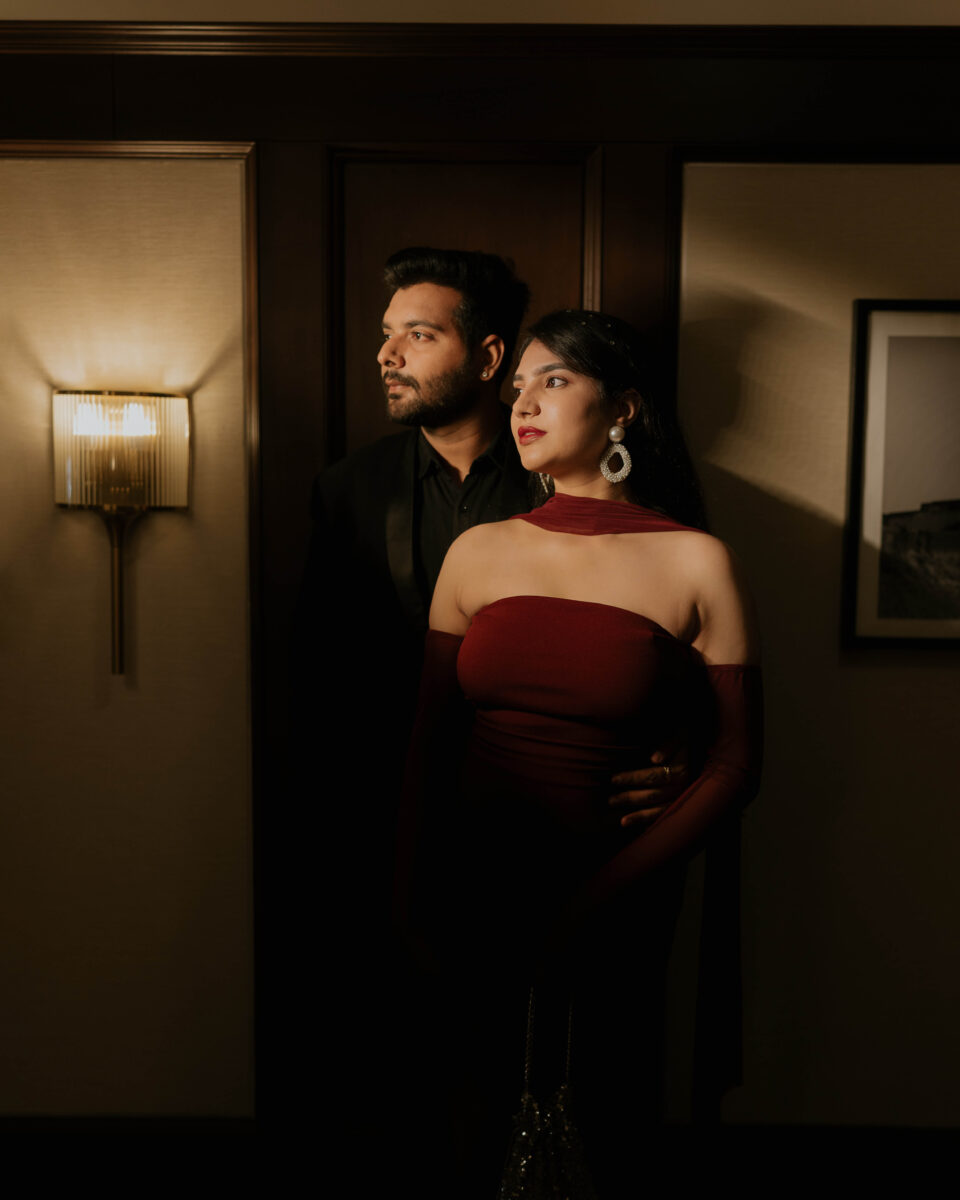
Couple portraits are easier before guests begin arriving in large numbers. Confirm when both partners will be dressed and available rather than assuming they will be ready at the invitation time. Keep the portrait plan realistic for the venue and the couple’s energy after the wedding.
Choose a small number of useful photographs: completed outfits, a relaxed close portrait and a wider image with the setting if it suits the location. Elaborate references may require more time and access than the reception allows. Tell the photographer what you value and let them suggest a workable sequence.
If portraits must happen later, agree who holds the guest flow briefly and where the couple will go. Disappearing without a plan can leave relatives waiting or create pressure to hurry back. A coordinated short session is more comfortable than repeatedly trying to find a gap between arriving groups.
Plan the guest flow alongside the photography
A reception checklist should assign small tasks to the people who can actually handle them. The couple should not become the contact point for missing relatives, queue changes and lighting questions while welcoming guests.
| Reception task | Person to confirm | Useful decision |
|---|---|---|
| Stage entry and exit | Venue or event coordinator | Clear route for each guest group |
| Essential family groups | Family representative | Names, availability and grouping |
| Couple portraits | Couple and photographer | Ready point and realistic location |
| Programme changes | Emcee or programme lead | Direct updates to the photography lead |
| Gallery access | Couple or nominated contact | How guests will receive their photographs |
Share these details when discussing the wedding and reception photography coverage. Include guest scale, planned programmes and whether stage and candid coverage must happen simultaneously. A detailed brief allows a proposal to explain the work rather than just naming the event.

Take essential family photographs before people leave
List the family combinations that are important, especially elders or relatives leaving early. Reception attendance can be fluid, so a coordinator should know when those people are present. Avoid postponing every essential photograph until the end, when the family may already be scattered.
Photograph guests with mobility needs in a comfortable arrangement. They may need a chair, easier access or a separate location. Tell the photographer and venue beforehand. A picture matters more when everyone can take part without struggling to reach a decorative stage.
Don’t let a long optional group list consume the entire evening. Complete the must-have photographs and then allow flexible requests as the flow permits. The TK Solanki wedding stories can help you discuss how formal groups and natural reception moments sit together in a gallery.
Record the reception beyond the couple’s position
The room contains greetings, conversations and people enjoying the celebration. Tell the team whether you want these photographs as part of the record. Identify relatives or friends whose interactions matter particularly, but avoid asking for constant surveillance of every guest. Thoughtful coverage needs priorities and space to observe.
Consider photographs of the setting before it becomes busy. Décor, table details and the overall room can provide context in an album, especially if family members contributed to the arrangements. These images should support the people rather than replace guest coverage. Clarify the balance if you have invested in a specific setup.
At the end, a quieter photograph of the couple or immediate family may be possible if everyone is willing and the coverage window allows it. Don’t treat this as an automatic requirement after a tiring evening. Make it an option and let the photographer suggest whether the conditions are suitable.
Decide how reception photographs will be shared
Guests often ask for their pictures soon after the event. Agree on the delivery process with the studio and give relatives a realistic message. A preview and a complete gallery may arrive at different stages. Don’t promise guests a deadline that has not been confirmed.
Ask whether the gallery can be organised so stage groups are easy to find. Clarify download access, gallery availability and any privacy preferences before distributing links. If particular images should remain private, discuss that in the booking agreement and repeat the preference with the final selection contact.
Save your own files according to the studio’s instructions when delivery is complete. A temporary gallery link is not a substitute for keeping the photographs you want long term. Nominate one person to manage feedback or album selections so requests do not reach the studio through several overlapping family conversations.
Include a realistic break for the couple
Discuss when the couple can eat or rest without interrupting essential guest greetings. The venue or family coordinator can help manage that pause and tell the photography lead when it happens. You do not need photographs of every moment of the evening. A comfortable break can leave you more present for the remaining guests and prevent portraits from becoming an endurance task. Include it in the reception plan rather than waiting until both partners are exhausted.
Frequently asked questions
Should every reception guest have a stage photograph?
That depends on your family’s expectations. If it is a priority, plan the queue and coverage explicitly. Also decide whether you want separate candid coverage so the gallery includes the atmosphere beyond formal greetings.
Can we combine reception portraits with wedding-day portraits?
They serve different purposes when outfits or locations change. You can keep reception portraits brief if the wedding gallery already covers the style you wanted. Discuss what is useful rather than repeating a long pose list.
What if guests arrive later than expected?
Follow the agreed coverage and additional-time process. Ask the family or event coordinator to make any extension decision with the photography lead. Clear terms are easier to use than a last-minute assumption.
Discuss your Ahmedabad reception plan
Send the reception date, venue, approximate guest scale and stage programme through the TK Solanki contact page. Mention your essential family groups, couple portrait preferences and whether you want photography away from the stage. These details help shape a coverage plan around the way you want to welcome and remember your guests.